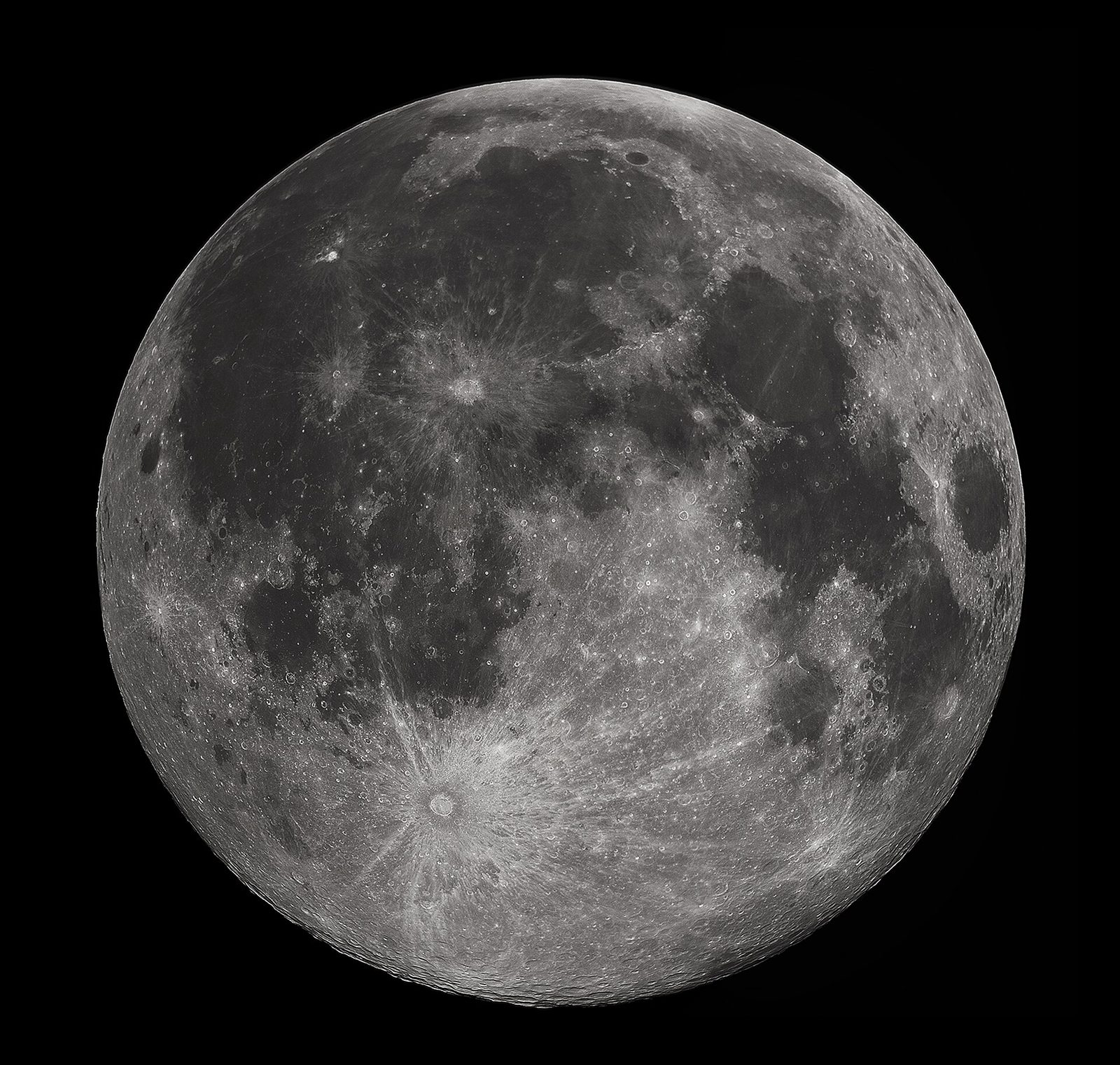
In popular English astrology, a “sign” usually means the tropical sign occupied by the Sun at birth. A Moon sign is the sign occupied by the Moon at that same moment. Both are longitudes on the ecliptic. They are not competing scientific identities. Astrology traditionally associates the Sun with visibility, season, and a kind of life-heat, and the Moon with cycles, moisture metaphors, and what changes quickly. Modern counseling-style astrology often recasts that pair as “outer self” versus “inner self.” Those recastings are recent compared with Hellenistic luminary doctrine. Interpretations vary.
Because the Sun’s apparent motion is slow, two people born weeks apart can share a Sun sign. Because the Moon is fast, two people born a day apart often do not share a Moon sign. That difference of tempo is the main practical reason Moon signs feel more “personal” once you calculate them. It is a feature of orbital periods as seen from Earth, not proof of hidden emotion.
What the Sun sign actually records
The tropical Sun sign answers a seasonal question: which thirty-degree sector from the equinox contains the Sun’s longitude? A person born with the Sun at 12° Leo in a tropical ephemeris is, in that frame, a Leo Sun. In a sidereal frame the same sky might place the Sun in Cancer, depending on ayanamsa. Labeling the frame prevents false arguments about who is “really” which animal.
Hellenistic texts treat the Sun as one of two luminaries, with Leo as its domicile. Day charts (Sun above the horizon) and night charts (Sun below) change how some traditional techniques weigh the Sun and Moon. That sect distinction rarely appears in sun-sign columns. It is a reminder that “Sun sign” is a slice of a larger craft.
What the Moon sign records
The Moon completes a circuit of the signs in roughly twenty-seven to twenty-eight days (a sidereal month; the synodic month with the Sun is about 29.5 days). In natal work, astrologers usually want the Moon’s sign and degree, and often its house. A hypothetical example: 4 March 1988, 22:40, Chicago (teaching data). The Moon may sit in a different sign than it did at noon that day. Publishing only the date would leave the Moon sign uncertain if the Moon changed signs overnight.
Traditional lunar topics include travel, the body as changeable, women as a social category in patriarchal handbooks, and the gathering or dispersing of moisture. Those lists are historical. They should not be used as medical advice or as a script about gender. Modern writers often say the Moon describes needs, memory, and care. That is a therapeutic idiom laid over an older planet.
Speed, orbs, and why people argue online
Internet debates sometimes treat Sun versus Moon as a contest for authenticity: “I’m a Scorpio Moon so ignore my Gemini Sun.” That contest is a product of personality-brand astrology. A natal diagram can hold both placements without electing a winner. If the Sun and Moon form a conjunction, opposition, or square, traditional aspect doctrine would call that a major conversation between luminaries. If they sit in trine or sextile, the conversation is often described as easier. Those are geometric metaphors. They do not rank a person’s honesty.
Element language adds another overlay. A fire Sun and water Moon might be narrated as spark versus tide. An earth Sun and earth Moon might be narrated as doubled emphasis on duration. Element essays are optional. A chart with mixed elements is normal, not a defect.
Birth time, hospitals, and rounded clocks
Sun sign rarely needs a precise minute except near ingress. Moon sign often does. Hospital records may round times; some regions record only a date. If your Moon is within a few degrees of a sign boundary, treat the Moon sign as provisional until a time is confirmed. Rectification—guessing a birth time from life events—is a specialized traditional practice with wide disagreement and no scientific validation. This site does not offer it as a service claim.
Time zones and daylight saving must be converted correctly. A Moon sign calculated with the wrong zone is simply a wrong longitude. That is software hygiene, not mysticism.
Reading the pair without turning it into a fortune
A cautious reading names both placements, notes whether the chart is day or night if you use traditional sect, and resists predicting events from a Sun–Moon pair alone. Compatibility articles that match “his Sun, her Moon” are a popular format, not a tested matching algorithm. Historical synastry looks at many planets and houses.
If the language of a Moon sign helps you talk about rest, family, or mood, use it as vocabulary. If a Sun sign helps you talk about a season of the year you were born into, that is seasonal poetry. Neither luminary owes you a biography. The next guides on rising signs and full charts show why two extra factors already overwhelm any two-word identity.
Phase of the Moon as a third layer
Besides sign, the Moon has a phase relative to the Sun: new, crescent, quarter, gibbous, full, and back again. Traditional authors sometimes described natal lunar phase as a condition of visibility and moisture metaphors. Modern writers sometimes map phase onto a developmental story. A hypothetical: Sun at 20° Scorpio and Moon at 22° Taurus is a full-Moon-like opposition across a traditional axis of fixed water and fixed earth. Interpreters may talk about awareness through contrast. They should not announce a monthly emotional crisis as a scientific cycle unique to that birth.
Phase does not replace sign. A full Moon in Virgo and a full Moon in Aries share a solar-lunar angle and differ in elemental costume. If you add phase to Sun-versus-Moon notes, you are still describing geometry. You are not locating a soul. If birth time is unknown, phase can still be estimated from the date unless the Moon is near a quarter boundary that needs hours. State the uncertainty. The pair of luminaries is already a rich diagram. Adding phase is optional literacy, not a hidden true self behind the Sun sign.
Working with both without a contest
Write both placements in a single notebook line, add the frame (tropical or sidereal), and refuse the word “real” as a prize. The Sun is real as a star; the Moon is real as a satellite; the signs are real as a cultural coordinate system. Personality is a research topic that does not issue from those coordinates. That sentence is the whole method.
One more practical note: eclipse seasons, when New or Full Moons occur near the lunar nodes, attract dramatic copy. A natal Sun or Moon near a node is sometimes called an eclipse birth in popular slang. Traditional node techniques exist and are specialized. For Sun-versus-Moon literacy you do not need them. If your luminaries sit on an axis with the nodes in a hypothetical wheel, mention the geometry once, then return to sign, house, and major aspects. Extra rarity branding is usually marketing. The Moon will still have been in a sign whether or not an eclipse occurred that month, and your task is still to describe a tradition rather than to promise an extraordinary life.